
Why Toddlers Understand More Than They Can Say: The 5x Vocabulary Rule
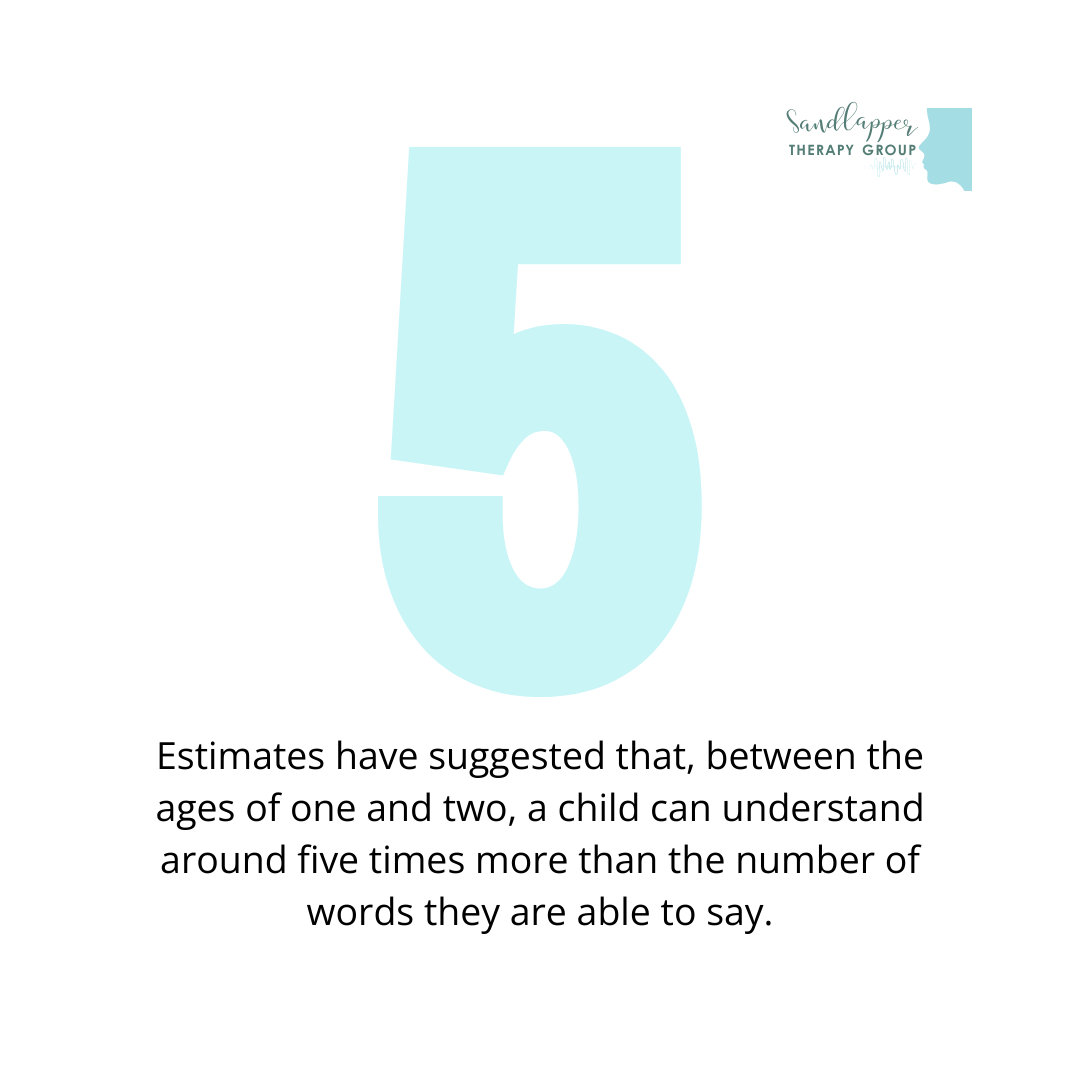
Did you know that between ages 1 and 2, children can often understand about five times more words than they can say?
This can be surprising for parents. A toddler who only says 10 words may actually understand 50 or more. A child who says 50 words may understand hundreds.
Understanding the difference between receptive language (what a child understands) and expressive language (what a child says) is essential when evaluating early speech and language development.
Receptive vs. Expressive Language
Receptive language is the ability to understand words, directions, and questions.
Expressive language is the ability to use words to communicate.
The American Speech-Language-Hearing Association (ASHA) explains that receptive language typically develops before expressive language — meaning children understand much more than they can verbally express.
Learn more here:
👉 https://www.asha.org/public/speech/development/language/
The “Five Times More” Concept
Research in early language development suggests that toddlers between 12 and 24 months may understand approximately five times more words than they can say.
For example:
A 15-month-old who says 10 words may understand 50 or more.
An 18-month-old who says 50 words may understand 200–300 words.
This gap is normal and reflects how the brain develops language comprehension before speech production.
Why Understanding Comes First
Language development follows a natural sequence:
Listening
Understanding
Attempting to imitate
Speaking independently
During the first two years of life, children are rapidly building neural pathways for language processing. According to the National Institute on Deafness and Other Communication Disorders (NIDCD), early exposure to rich language experiences strengthens these connections and supports later expressive growth.
👉 https://www.nidcd.nih.gov/health/speech-and-language
Typical Vocabulary Milestones
Here’s what we commonly see in toddlers:
12 Months
Says 2–6 words
Understands ~50 words
18 Months
Says ~50 words
Understands ~300 words
24 Months
Says 200–400 words
Understands 500+ words
The CDC’s Learn the Signs. Act Early. program highlights these early language milestones as critical markers of development.
👉 https://www.cdc.gov/ncbddd/actearly
When to Be Concerned
While it is normal for receptive language to outpace expressive language, there are red flags to watch for:
Not responding to their name by 12 months
Not following simple directions by 18–24 months
Not saying at least 50 words by 24 months
Limited eye contact or social engagement
Loss of previously acquired words
ASHA emphasizes that early identification and intervention significantly improve outcomes for children with language delays.
👉 https://www.asha.org/practice-portal/clinical-topics/spoken-language-disorders/
Why Early Support Matters
Strong receptive language skills predict:
Reading comprehension
Academic achievement
Social communication
Emotional regulation
Research shows that early intervention improves expressive vocabulary growth and long-term literacy skills (Roberts & Kaiser, 2011).
If a child struggles in both receptive and expressive language, early speech therapy can help strengthen foundational communication skills.
How Parents Can Support Vocabulary Growth
You can encourage both receptive and expressive vocabulary by:
Narrating daily routines
Reading interactive books
Labeling objects repeatedly
Expanding on your child’s words
Child: “Dog!”
Parent: “Yes, that’s a big brown dog!”
Giving simple directions during play
Consistent language exposure builds understanding first — and expressive skills follow.
Final Thoughts
It is completely normal for toddlers to understand far more than they can say. The “five times more” concept reflects healthy language development.
However, if your child is not meeting expressive milestones or seems to struggle with understanding language, early evaluation provides clarity and peace of mind.
If you have concerns about your child’s speech or language development, contact our office today to schedule a comprehensive evaluation.
References
American Speech-Language-Hearing Association (ASHA). (2024). Speech and Language Development. Retrieved from https://www.asha.org
Centers for Disease Control and Prevention (CDC). (2023). Learn the Signs. Act Early. Retrieved from https://www.cdc.gov/ncbddd/actearly
National Institute on Deafness and Other Communication Disorders (NIDCD). (2023). Speech and Language Development. Retrieved from https://www.nidcd.nih.gov
Roberts, M. Y., & Kaiser, A. P. (2011). The effectiveness of parent-implemented language interventions. American Journal of Speech-Language Pathology.