
Stuttering Information for Parents: When to Monitor and When to Seek Speech Therapy
Stuttering can feel alarming when you first notice it. One day your child is speaking fluently, and the next you hear repetitions, pauses, or “stuck” words. The good news? Stuttering is common in early childhood, especially between ages 2–5, during rapid language development.
Understanding how long your child has been stuttering is one of the most important factors in determining whether therapy may be needed.
According to the American Speech-Language-Hearing Association (ASHA), stuttering (a fluency disorder) involves disruptions in the flow of speech such as repetitions, prolongations, and blocks.
👉 https://www.asha.org/public/speech/disorders/stuttering/
Let’s break down what current research and clinical guidelines suggest.
What Is Stuttering?
Stuttering may include:
Sound repetitions: “b-b-b-ball”
Syllable repetitions: “ba-ba-baby”
Word repetitions: “I-I-I want that”
Prolonged sounds: “ssssun”
Blocks (no sound comes out)
Visible tension or struggle
Avoidance of words or speaking situations
Not all disfluency is stuttering. Many young children go through periods of typical developmental disfluency, especially when their language skills are growing quickly.
Stuttering Timeline: What Research Suggests
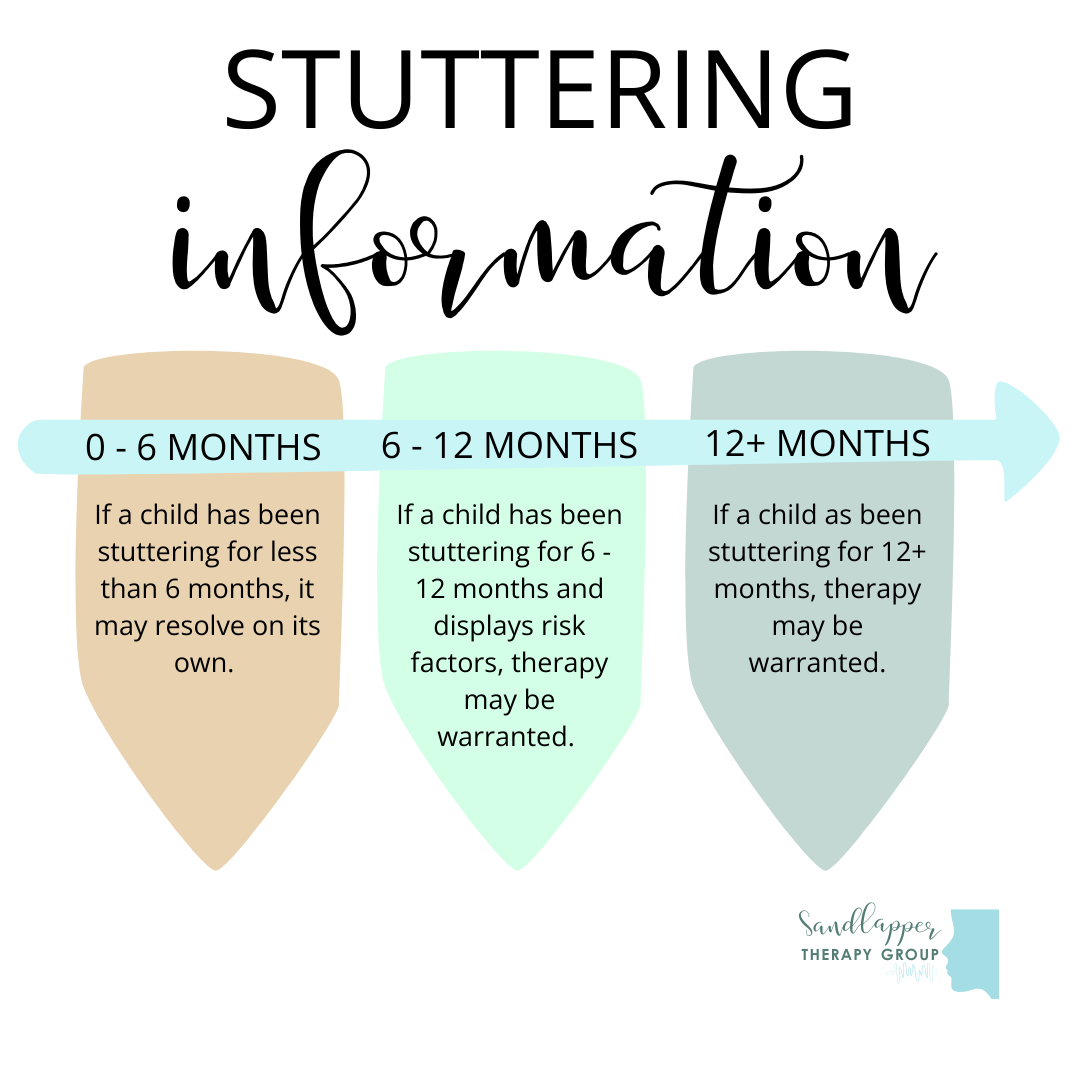
0–6 Months of Stuttering
If a child has been stuttering for less than six months, it may resolve on its own.
Many children experience temporary disfluency during periods of:
Rapid vocabulary growth
Increased sentence length
Emotional excitement
Research shows that a significant percentage of children who begin stuttering will naturally recover, particularly if symptoms are mild and recent (Yairi & Ambrose, 2013).
That said, early monitoring is important. A speech-language evaluation can identify risk factors for persistence.
6–12 Months of Stuttering
If stuttering continues for 6–12 months, therapy may be warranted — especially if risk factors are present.
Risk Factors for Persistent Stuttering:
Family history of stuttering
Male gender (boys are more likely to persist)
Stuttering lasting longer than 6 months
Increased tension or physical struggle
Negative emotional reactions
Little improvement over time
ASHA’s Fluency Disorders Practice Portal highlights duration as a significant factor in determining risk for chronic stuttering.
👉 https://www.asha.org/practice-portal/clinical-topics/fluency-disorders/
Early intervention during this stage can reduce severity and prevent long-term emotional impacts.
12+ Months of Stuttering
If a child has been stuttering for 12 months or longer, therapy is often recommended.
Research indicates that the likelihood of spontaneous recovery decreases as stuttering persists beyond one year (Yairi & Ambrose, 2013).
At this point, therapy may:
Reduce frequency and severity
Decrease physical tension
Prevent avoidance behaviors
Improve confidence and participation
Why Early Intervention Matters
Early speech therapy for stuttering is associated with:
Higher rates of recovery
Lower long-term severity
Reduced anxiety related to speaking
Improved quality of life
One of the most well-researched early interventions is the Lidcombe Program, a parent-implemented behavioral treatment with strong evidence supporting its effectiveness (Onslow et al., 2003).
ASHA supports early identification and intervention for fluency disorders to improve outcomes.
👉 https://www.asha.org/public/speech/disorders/stuttering/
What Causes Stuttering?
Current research suggests stuttering is:
Neurophysiological in origin
Influenced by genetics
Not caused by parenting style
Not caused by anxiety
Not caused by intelligence
Environmental factors do not cause stuttering, but communication pressure can increase severity.
Signs Your Child May Need an Evaluation
Consider scheduling a speech-language evaluation if your child:
Has been stuttering for more than 6 months
Shows visible tension or struggle
Avoids speaking
Expresses frustration about talking
Has a family history of stuttering
Is older than 3½–4 years with persistent stuttering
Even if therapy is not immediately recommended, an evaluation provides peace of mind and professional guidance.
How Speech Therapy Helps Children Who Stutter
Speech therapy for young children typically includes:
✔ Parent coaching
✔ Play-based sessions
✔ Reducing speaking pressure
✔ Modeling slower speech
✔ Positive reinforcement
✔ Emotional support
For older children, therapy may include:
Fluency-shaping techniques
Stuttering modification strategies
Cognitive-behavioral components
Self-advocacy training
Treatment is individualized and evidence-based.
What Parents Can Do at Home
While monitoring stuttering, parents can:
Maintain calm, patient eye contact
Slow their own rate of speech
Avoid telling the child to “slow down”
Avoid finishing sentences
Reduce time pressure during conversations
Focus on what the child says, not how they say it
The National Stuttering Association offers additional family resources.
👉 https://westutter.org/
Emotional Impact of Stuttering
Children who stutter are at higher risk for:
Social anxiety
Avoidance behaviors
Negative self-perception
Early supportive intervention helps protect emotional well-being and confidence.
Fluency is only one part of communication. A child’s message matters more than their speech pattern.
Final Thoughts
Stuttering is common in early childhood, but duration and risk factors matter.
0–6 months: May resolve naturally
6–12 months: Monitor closely; therapy may be appropriate
12+ months: Therapy is often recommended
If you are unsure whether your child’s stuttering is developmental or persistent, early evaluation is the best next step.
Our speech-language pathologists provide evidence-based fluency therapy tailored to your child’s needs. Contact us today to schedule a consultation.
References
American Speech-Language-Hearing Association (ASHA). (2024). Stuttering (Fluency Disorder). Retrieved from https://www.asha.org/public/speech/disorders/stuttering/
American Speech-Language-Hearing Association (ASHA). (2024). Fluency Disorders Practice Portal. Retrieved from https://www.asha.org/practice-portal/clinical-topics/fluency-disorders/
Onslow, M., Packman, A., & Harrison, E. (2003). The Lidcombe Program of Early Stuttering Intervention.
Yairi, E., & Ambrose, N. (2013). Epidemiology of stuttering: 21st century advances. Journal of Fluency Disorders.
National Stuttering Association. (2024). Retrieved from https://westutter.org/