
Speech Sound Development Norms: When Should Children Master Specific Sounds?
One of the most common questions parents ask is:
“Is my child’s speech normal for their age?”
Children develop speech sounds in a predictable sequence. While every child develops at their own pace, there are well-established speech sound development norms that guide speech-language pathologists in determining what is typical — and when to seek support.
Understanding these milestones can help you feel confident about your child’s speech development.
How Speech Sounds Develop
Speech sounds are not mastered all at once. Some sounds are easier to produce and typically develop earlier, while others require more precise tongue placement and develop later.
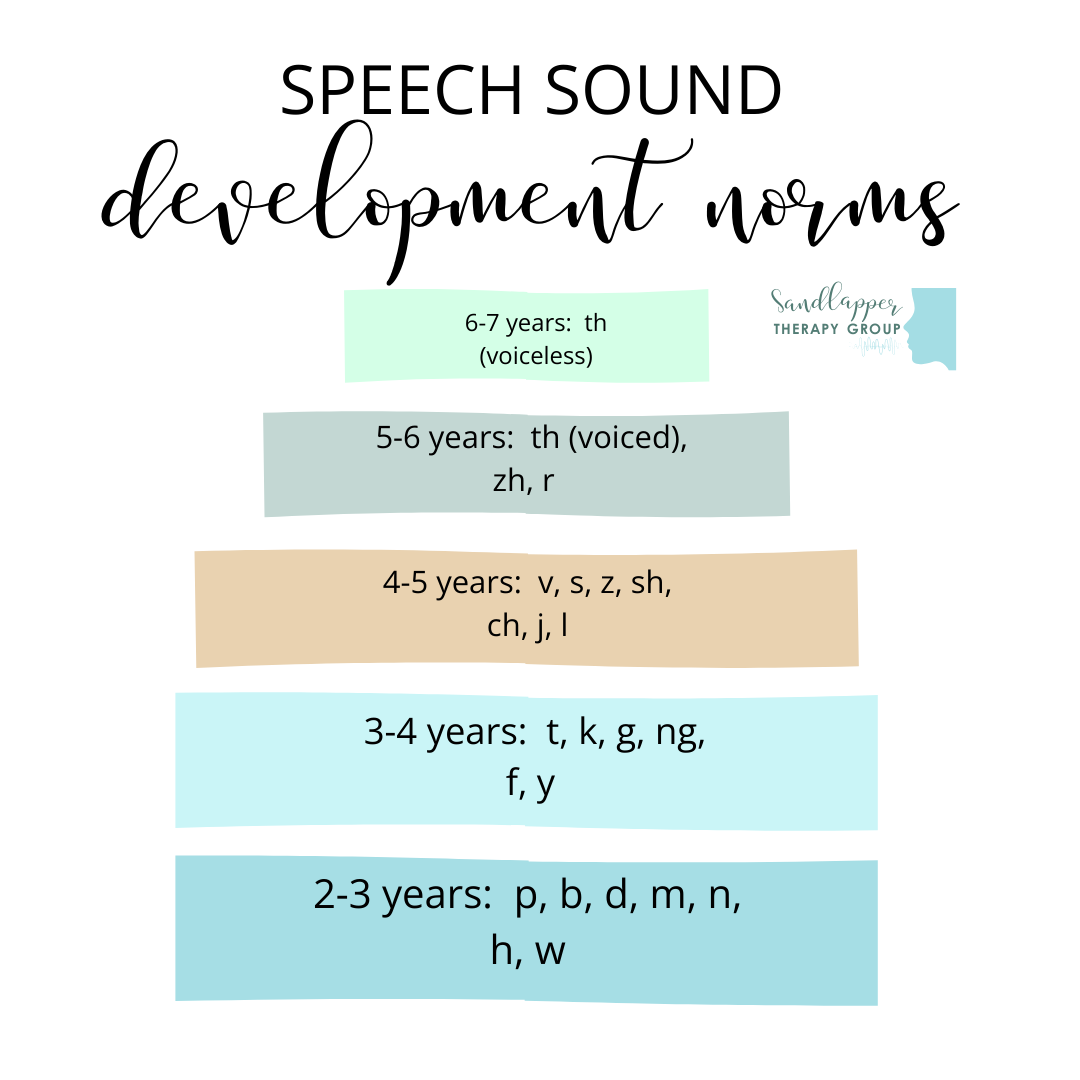
According to developmental research and clinical guidelines used in pediatric speech-language pathology, speech sounds typically emerge in the following age ranges:
Speech Sound Development by Age
2–3 Years
Early developing sounds:
p, b, d
m, n
h, w
At this stage, speech may not be fully clear, but familiar listeners should understand much of what the child says.
3–4 Years
Middle developing sounds:
t, k, g
ng
f
y
Children may still make sound substitutions, but speech should be becoming increasingly understandable.
4–5 Years
Later developing sounds:
v
s, z
sh, ch
j
l
By age 4–5, children should be understood most of the time, even by unfamiliar listeners.
5–6 Years
More complex sounds:
voiced “th” (as in this)
zh (as in measure)
r
6–7 Years
Latest developing sounds:
voiceless “th” (as in thumb)
By age 7, children should have mastered most speech sounds and be at least 90% intelligible to unfamiliar listeners.
What Is Considered “Mastery”?
Mastery means a child produces the sound correctly in:
Words
Sentences
Conversation
Across environments
Occasional mistakes may still happen, but consistent errors beyond the expected age range may indicate a speech sound disorder.
The American Speech-Language-Hearing Association (ASHA) provides clinical guidance on articulation and phonological disorders here:
👉 https://www.asha.org/public/speech/disorders/speech-sound-disorders/
Speech Sound Disorders: Articulation vs. Phonology
Speech difficulties generally fall into two categories:
Articulation Disorder
Difficulty producing individual sounds correctly (e.g., distorted /r/).
Phonological Disorder
Patterns of sound errors (e.g., saying “tat” for “cat”).
ASHA’s Practice Portal outlines assessment and treatment guidelines for both:
👉 https://www.asha.org/practice-portal/clinical-topics/articulation-and-phonology/
Why Speech Sound Development Matters
Clear speech supports:
Reading and spelling
Classroom participation
Social confidence
Peer relationships
Research shows that persistent speech sound disorders are associated with increased risk of literacy difficulties (Lewis et al., 2000; Peterson et al., 2009).
The National Institute on Deafness and Other Communication Disorders (NIDCD) emphasizes the importance of early identification and intervention in communication development:
👉 https://www.nidcd.nih.gov/health/speech-and-language
When Should You Be Concerned?
Consider a speech-language evaluation if your child:
Is difficult to understand compared to peers
Is missing sounds expected for their age
Shows frustration when speaking
Is frequently asked to repeat themselves
Has persistent sound errors past the expected mastery age
Early intervention leads to stronger and faster outcomes.
Evidence-Based Speech Therapy Approaches
Speech-language pathologists use research-supported treatment approaches, including:
Motor-based articulation therapy grounded in principles of motor learning (Maas et al., 2008)
Phonological contrast therapy for sound pattern errors (Gierut, 2001)
Cycles approach for multiple sound errors (Hodson, 2010)
Structured home practice programs
A 2021 study in the Journal of Speech, Language, and Hearing Research supports early, targeted intervention for improving speech intelligibility outcomes (Hustad et al., 2021).
Remember: Every Child Develops at Their Own Pace
While these norms provide helpful guidance, development is not identical for every child. Some sounds may emerge slightly earlier or later.
However, if speech errors persist beyond typical developmental ranges, a professional evaluation can provide clarity and peace of mind.
Final Thoughts
Speech sounds develop in a predictable sequence from ages 2 through 7.
Early sounds: p, b, m
Middle sounds: k, g, f
Later sounds: s, z, l
Latest sounds: r, th
If you have concerns about your child’s speech clarity or sound production, early support can make a meaningful difference in confidence, communication, and academic success.
Contact our office today to schedule a comprehensive speech-language evaluation.
References
American Speech-Language-Hearing Association (ASHA). (2024). Speech Sound Disorders Practice Portal. Retrieved from https://www.asha.org
Gierut, J. A. (2001). Complexity in phonological treatment. Journal of Speech, Language, and Hearing Research.
Hodson, B. W. (2010). Evaluating and Enhancing Children’s Phonological Systems.
Hustad, K. C., et al. (2021). Longitudinal growth in speech intelligibility in children. Journal of Speech, Language, and Hearing Research.
Lewis, B. A., et al. (2000). Speech sound disorders and literacy outcomes. Journal of Speech, Language, and Hearing Research.
Maas, E., et al. (2008). Principles of motor learning in treatment of motor speech disorders. American Journal of Speech-Language Pathology.
National Institute on Deafness and Other Communication Disorders (NIDCD). (2023). Speech and Language Development. Retrieved from https://www.nidcd.nih.gov
Peterson, R. L., et al. (2009). Speech sound disorder and reading outcomes. Journal of Child Psychology and Psychiatry.